News
Tag
News
Sustainability
by FUL Foods
FUL Foods is partnering with Lgem and Algreen on a joint project to produce plant-based protein from microalgae grown on food and agricultural residual streams.
Why residual streams
The EU generates millions of tonnes of food and agricultural side streams each year. Many are rich in plant cell-wall polysaccharides, a nutrient source that goes largely unused today. Feeding these streams to microalgae turns a waste problem into a protein supply and supports a more circular food system.
What the project does
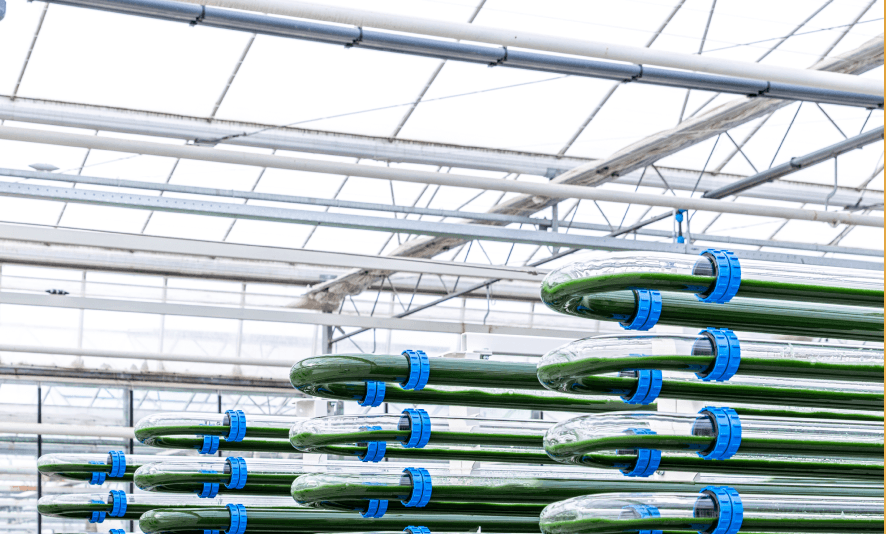
The partners work with Galdieria, a microalgae genus cultivated here under mixotrophic conditions. The work covers four steps: selecting suitable residual streams and Galdieria strains, optimising cultivation conditions, scaling production from laboratory to pilot scale, and developing efficient protein extraction and purification. The resulting protein ingredients will then be tested in plant-based food products.
Why it matters
Microalgae are a sustainable protein source, but the cost of producing biomass and extracting its valuable components still holds back commercial scale. Low-cost residual streams as a growth substrate address that cost directly. The goal is a cultivation process that is cost-effective and scalable, so microalgae protein can compete as a food ingredient.